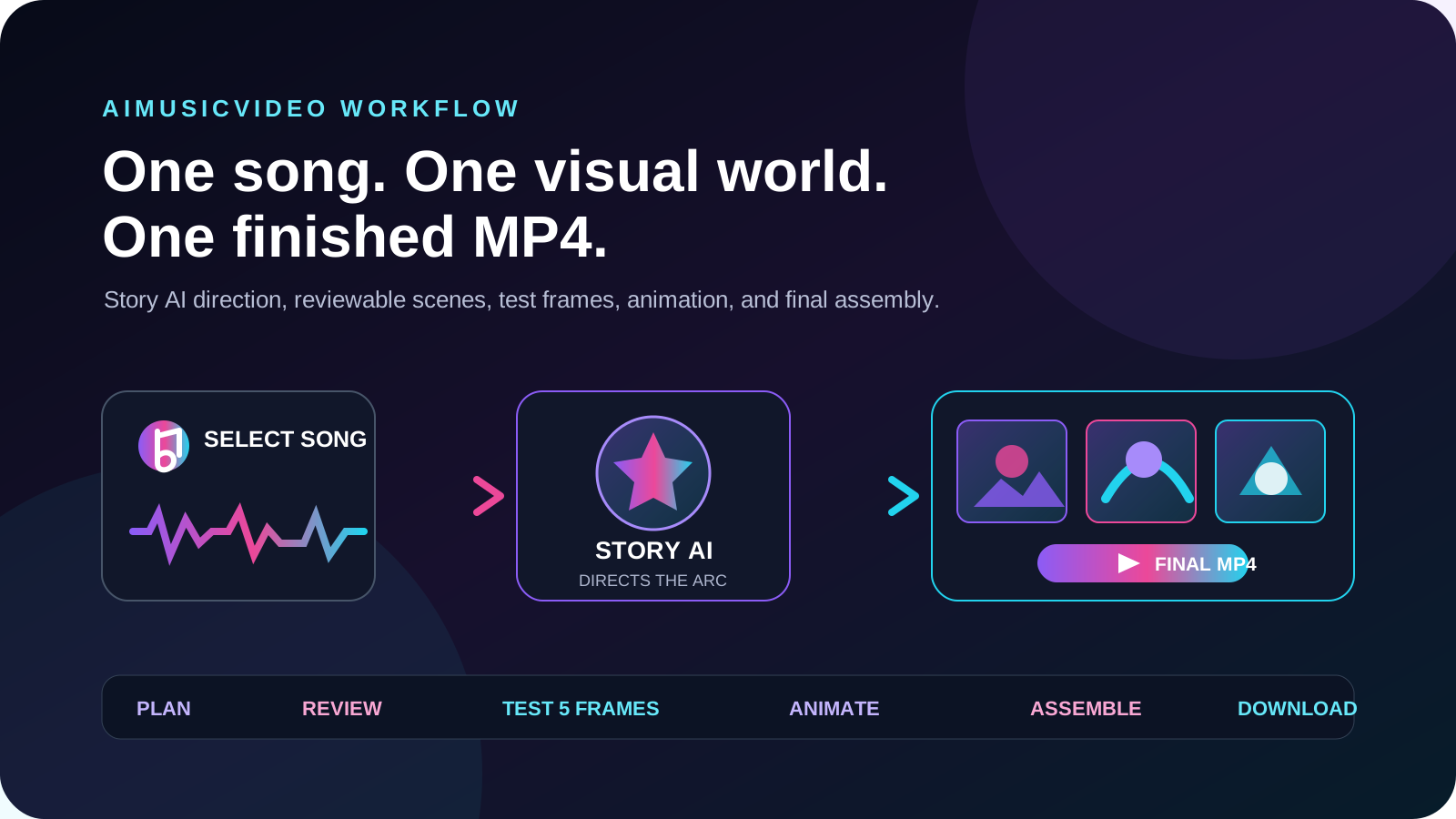
A song already contains a visual blueprint: changes in energy, repeated hooks, verses, pauses, emotional turns, and a final payoff. AIMusicVideo's one-shot workflow reads that structure and turns it into a complete production plan instead of asking you to invent every scene from scratch.
Select a song from your dashboard, click Create Video, and choose your Story AI. You can provide a location or creative idea, or leave the direction blank. The selected model will analyze the song and propose the story world, performer action, camera language, visual progression, and scene timing. You stay in control at every spending step before the final MP4 is assembled.
What 'one-shot' means in AIMusicVideo
One-shot describes one connected, song-to-video production workflow. It does not force the finished video to look like one uninterrupted camera take. Story AI can design cuts, new locations, performance moments, visual transformations, and a beginning-to-end arc while keeping the same song, theme, and character identity attached to the project.
Automation without giving up control
Story AI creates the directorial plan, but you can review scene prompts, test a small image batch, remix individual scenes, approve animation, and see the estimated credit cost before each major generation step.
1. Start with a song from your dashboard
Open My Songs and click Create Video on the track you want to visualize. AIMusicVideo carries the selected song into the homepage music-video prompt. If the song was created from a gallery theme, that theme travels with it, so a track inspired by Light-Trail Construction or Reality Folding can begin with the correct visual world already selected.
- The song stays selected: no need to find it again in another menu.
- The originating theme stays attached: the visual direction can begin from the same concept that inspired the song.
- The character can stay locked: a chosen performer or reference image can remain the identity anchor across scenes.
2. Give Story AI a direction - or leave it blank
The creative-direction field is optional. Enter a setting, location, visual idea, or special instruction when you already know what you want. If you leave it blank, the selected Story AI creates a one-shot music-video direction from the song itself.
The model selector lets you choose the Story AI used for direction and scene writing. Grok 4.5, GPT-5.6 Luna, Claude, and Kimi options can be selected from the interface. The model name shown in the prompt changes with your selection, so users know exactly which Story AI will direct a blank prompt.
3. Story AI reads the musical and emotional arc
The production brief shown as 'What the song is about' is working context for the storyboard, not just a short listener description. It tells Story AI which song is selected and what it should analyze before writing scenes.
- Song title and existing description
- Lyrics and LRC timing when available
- Verse, chorus, bridge, instrumental, and outro structure
- Mood, genre, pacing, and changes in energy
- The strongest story world and locations for the track
- Performer action, camera movement, visual style, and scene progression
- Selected theme, character identity, wardrobe, and reference-image locks
The result is a timed shot list designed around the song rather than a collection of unrelated prompts. A quiet opening can use closer framing and slower movement, while a chorus can widen the environment, increase motion, or reveal the central visual transformation.
4. Review the storyboard before generating images
Storyboard planning and image rendering are separate steps. Once the scene plan is ready, open the production workspace and read the scene prompts before spending credits on images. You can change a location, clarify an action, strengthen character continuity, or remix one scene without rebuilding the entire project.
Planning does not automatically render every image
AIMusicVideo stops after the scene plan so you can inspect it. Images begin only after you choose Generate Images and confirm the batch and its estimated cost.
5. Test five storyboard images first
Instead of committing to the entire storyboard immediately, start with a five-scene test batch. Those frames help you verify the character, theme, locations, lighting, and continuity while using only a portion of the full image budget.
- Review or remix the saved scene prompts.
- Click Generate Images.
- Choose the first five test scenes or all remaining scenes.
- Review the displayed image count and credit estimate.
- Generate the rest only when the test frames establish the right visual language.
If one test frame misses the idea, revise that scene and regenerate it. You do not need to discard the entire storyboard.
6. Animate the approved scene frames
Approved images become the visual anchors for scene-video generation. AIMusicVideo uses the saved scene timing to determine how long each clip should run and keeps the motion request tied to that scene's action and camera direction.
- Generate only the checked scenes when you want a controlled batch.
- Review per-scene duration and estimated credits before confirming.
- Replace or reprocess individual clips without rebuilding finished scenes.
- Keep the selected character and visual world consistent across the sequence.
7. Assemble and download the final MP4
When the required scene clips are ready, Final Video Production combines them in song order into one downloadable MP4. The finished file stays connected to the storyboard workspace, so you can download it, review it, or reprocess the final assembly after changing a scene.
The workflow remains traceable from the dashboard song to the visual brief, storyboard scenes, generated frames, animated clips, and final export. That is the core AIMusicVideo service: one place to move from a song idea to a finished music video.
See what the production used
Each storyboard includes a Cost and Credits report. Recorded charges show what was actually deducted from the account, including linked retries and regenerations. The current production estimate uses the saved song, images, completed video seconds, and current rates to explain the approximate cost of rebuilding the project today.
- Song-generation credits
- Scene-image credits and saved image count
- Scene-video credits, clip count, and total generated seconds
- Final MP4 assembly status
- Remaining account credits and recorded charge history
This makes the workflow easier to budget before a full render and easier to audit after the video is complete.
When to leave the direction blank
Leave the prompt blank when you want Story AI to interpret the song freely. This works especially well when the lyrics, title, emotional arc, and attached theme already provide a strong concept.
Add a short direction when a non-negotiable detail matters: a specific city, a stage performance, one central visual transformation, a wardrobe requirement, or an instruction to avoid literal lyric illustration. A useful prompt guides the director without rewriting the whole storyboard yourself.
Frequently asked questions
Does one-shot mean one continuous camera take?
No. One-shot means one connected song-to-video workflow. Story AI can still design multiple scenes, locations, cuts, camera moves, and visual transformations.
What happens if I leave the music-video prompt blank?
The selected Story AI analyzes the selected song and creates the story world, locations, performer action, camera direction, visual style, and scene progression for you.
Can I edit scenes before generating images?
Yes. Scene planning finishes first. You can review or remix the saved prompts before choosing an image batch.
Can I test the visual style before generating the whole storyboard?
Yes. Generate the first five storyboard images as a test batch, review the results, and then generate all remaining scenes when the look is working.
Will a song's gallery theme carry into the video workflow?
Yes. When the song was created from a theme, Create Video can carry both the selected song and its originating theme into the homepage music-video setup.
Can I see how many credits the production used?
Yes. The storyboard Cost and Credits report separates recorded account charges from the current production estimate and breaks down song, image, scene-video, and final assembly usage.
Choose a dashboard song, select a Story AI, add an optional direction or leave it blank, and review the storyboard before generating the first five test frames.
Start a one-shot music video