Character consistency is not one magic prompt. It is a production discipline: use a strong identity reference, keep the stable traits explicit, vary only what the shot needs, and review continuity before animation. Apply these checks while following the full song-to-video production workflow.
AIMusicVideo keeps the selected character or reference image connected to the storyboard so each scene begins from the same identity anchor.
Choose one clean identity anchor
Start with a front-facing or three-quarter reference where the face, hair, silhouette, and core wardrobe are easy to read. Avoid a tiny full-body subject, heavy motion blur, multiple people, or lighting that hides the defining features.
If a project needs several outfits, establish each wardrobe change deliberately instead of letting the model improvise clothing in every scene.
Separate fixed traits from scene variables
Fixed traits describe who the performer is. Variables describe what changes for the shot.
- Keep fixed: face shape, skin tone, hair, age range, signature wardrobe, accessories, and overall rendering style.
- Change intentionally: pose, expression, camera distance, location, action, time of day, and lighting.
- Repeat only what matters: long prompts stuffed with changing details can dilute the identity anchor.
Plan continuity in the storyboard
Adjacent scenes should make visual sense even when the camera jumps. Watch screen direction, wardrobe, held objects, weather, and whether a location change has a story reason.
Use a wide shot, medium shot, and close-up as different views of the same beat rather than generating three unrelated character descriptions.
Test difficult scenes before the full batch
Start with scenes that stress identity: the widest shot, the strongest profile, the darkest lighting, and the most unusual action. If the character survives those tests, the simpler coverage is more likely to work.
Regenerate drifting storyboard frames before animation. Motion generation cannot reliably repair a face or wardrobe that is already wrong in the source image.
Review the clips as a sequence
A still frame may look convincing by itself but feel inconsistent beside the previous shot. Review clips in order and check the first and last frames around each transition.
Replace the weakest scene rather than changing the character anchor halfway through the project.
Frequently asked questions
Can AI guarantee a perfectly identical face in every scene?
No. A strong reference and controlled prompts improve consistency, but generative results can vary. Review and regenerate individual scenes that drift.
Should I repeat the full character description in every prompt?
Keep the stable identity traits available, but avoid burying them under unnecessary changing details. Let each scene prompt focus on action, framing, and environment.
When should I animate a storyboard frame?
Animate it after the face, wardrobe, composition, and surrounding sequence work as still images. Fixing continuity earlier avoids wasting video generations.
Example videos
Finished theme music videos — click a card to watch.
 Video
Video
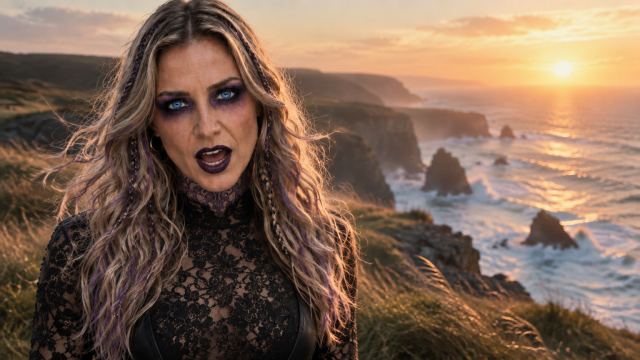
ESTABLISHED LOOK: Gothic metal lead singer with long wavy blonde/purple-streaked braided hair, purple smoky eye shadow, dark lips. Outfit 1: Black lace gown with obsidian crown. Outfit 2: Black leather armor. Outfit 3: Dark green corset gown. TIMECODED SEGMENTS: 0:00 - Soft candle glow on lead singer in black lace gown staring upward in shadow, breathing gently. 0:05 - Violent camera shake, purple lightning flashes, heavy dark mist surges into frame. 0:10 - Fast zoom-in on vocalist breaking into a fierce scream in dark leather armor. 0:15 - Guitar riffs kick in; medium shot of singer rocking back and forth under violet strobe lights. 0:20 - Close-up on singer's face with purple eye makeup, lips moving in synced performance. 0:25 - Low-angle tracking shot as singer steps forward on dark obsidian stone floor. 0:30 - Close-up of silver chains coiling around singer's arms, metallic glint under dim light. 0:35 - Singer pulls hands upward in leather armor, tension building in dark Gothic archway. 0:40 - Singer standing under a towering stained-glass window radiating deep violet beams. 0:45 - Slow-motion shot of dark throne crumbling into floating stone fragments. 0:50 - Chorus explodes: wide shot of singer belting vocals under stormy sky with purple lightning strikes. 0:55 - Rapid cuts between black lace gown with crown and green corset gown. 1:00 - High-angle shot of singer standing on high stone balcony looking down at dark shadows below. 1:05 - Close-up of singer singing "Princess or Cockroach" aggressively into camera. 1:10 - Swirling black embers and purple dust rising around singer in full body armor. 1:15 - Sudden drop: singer drops to knees as dramatic low fog rolls across the floor. 1:20 - Verse 2: singer walking slowly through dark gothic hallway lined with stone gargoyles. 1:25 - Tracking shot following singer from behind, purple-streaked hair moving dynamically. 1:30 - Close-up profile of singer in green corset, intense gaze looking sideways. 1:35 - Mirror reflection shot: image of crown glitches and shatters into dark glass shards. 1:40 - Chorus 2 wide shot: violent purple shockwaves ripple outward from singer's feet. 1:45 - Medium shot of singer singing furiously, camera rotating 360 degrees around her. 1:50 - Chains shatter violently in slow motion with bright purple energy sparks. 1:55 - Bridge: singer ripping off silver crown and throwing it to the obsidian floor. 2:00 - Close-up on singer screaming "Now hear me roar!" with crimson and violet r
 Video
Video
A cinematic gothic-metal performance video featuring Mercy Fornan as two contrasting sides of the same woman. Both versions must look unmistakably like the same real performer, but they always appear in separate shots—never divided down the middle and never merged into one body. The white persona represents elegance, discipline, compassion, and control. Mercy wears a long ivory-white couture gown covered in gold embroidery, with an elaborate crystal-and-gold cluster necklace, matching earrings, rings, and delicate hair ornaments. Her platinum-blonde hair is full and graceful. Her movements are controlled, dignified, and emotionally restrained. The red persona represents rage, rebellion, temptation, and chaos. Mercy wears an elaborate red-and-black gothic gown with many rings, layered gothic necklaces, ruby pendants, chains, crosses, crescent moons, and dark metallic hair accessories. Her crimson hair is extremely full, wild, and wind-swept. Her makeup is very heavy and theatrical, with black shadow and dramatic crimson patterns spreading around her eyes, forehead, temples, and cheeks. Her vivid blue eyes must always remain clearly visible. The video alternates between the two personas performing in contrasting environments. White Mercy appears in a luminous ivory-and-gold hall with elegant architecture, soft moving curtains, reflective floors, and warm light. Red Mercy performs in a dark black-and-crimson chamber filled with drifting smoke, moving shadows, fractured mirrors, and pulsing red light. As the song intensifies, the editing moves more rapidly between them. Use matching compositions and mirrored actions to show that they are psychologically connected: one raises her hand and the other completes the movement; one looks into a mirror and sees the other; one walks through a doorway and the scene changes to the opposite persona. They may eventually confront each other across a large mirror or stand on opposite sides of the same room, but they must remain two complete, believable women wearing their separate outfits. Include strong close-ups, strict side profiles, full-body performance shots, dramatic walking shots, controlled hand gestures displaying their rings, and detailed shots of their necklaces, hair ornaments, makeup, and eyes. Mercy performs directly to the camera during the lyrics with accurate mouth movement and powerful gothic-metal attitude. During instrumental passages, her mouth must remain closed—use intense eye contact, movement
 Video
Video
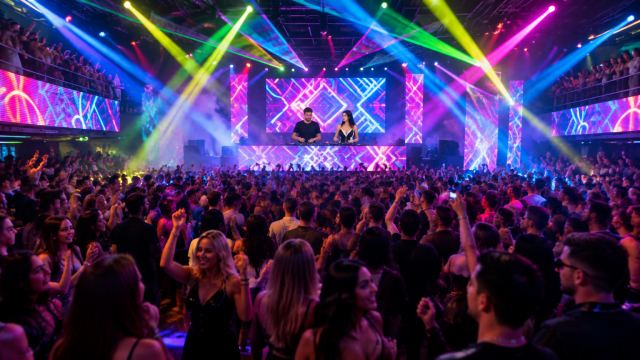
High-energy indoor disco concert in a huge modern nightclub packed with hundreds of adult men and women. PRIORITY THROUGHOUT THE ENTIRE VIDEO: SHOW THE DANCING CROWD, NOT THE DJs. The dance floor must always feel packed, alive and energetic. People dance naturally, energetically and happily to the beat at NORMAL SPEED, smiling, laughing, clapping, jumping, waving arms and raising hands. Show real human dance movement and genuine party excitement. NO slow motion, stiff, robotic, frozen, emotionless or zombie-like movement. During EVERY “BALLA BALLA” chorus, make the energy visibly increase: large groups clap rhythmically together, raise both hands, jump together and react enthusiastically to the beat. These chorus moments should feel like a huge live concert celebration. Use constantly changing dynamic camera shots: massive wide shots of the packed dance floor, camera moving through and inside the crowd, different groups dancing, medium shots and close-ups of happy dancers, overhead shots of hundreds of people, side-angle moving shots and occasional views toward the DJ stage. Keep changing people and camera positions. Never focus repeatedly on the same faces or the same small group. Show many different adult men and women with clearly varied faces, hairstyles, appearances and sporty/casual modern nightclub clothing. Natural facial expressions, realistic bodies and realistic dancing. TWO professional DJs together behind ONE large modern DJ console: ONE ADULT MAN and ONE BEAUTIFUL ADULT ITALIAN WOMAN with long dark hair, a feminine curvy figure and a large clearly visible bust, wearing stylish fitted modern clubwear. Both DJs FACE THE CROWD and actively mix the track. DJs may raise their hands and energize the audience, but they are SECONDARY and shown only occasionally. NEVER make the DJs the main focus. Powerful flashing club lights, colorful neon, moving lasers, large LED screens, strobes, light smoke and dramatic concert lighting synchronized with the music. Constant movement and something visually exciting happening throughout the video. ABSOLUTELY NO singer, NO vocalist, NO singing, NO lip-sync, NO mouths moving to lyrics, NO singing to camera, NO main character, NO romantic couples, NO repeated faces, NO outdoor scenes, NO streets. Cinematic photorealistic music video, realistic human movement, sharp detailed faces, professional concert cinematography, high energy from beginning to end
 Video
Video
Un rapido susseguirsi di sguardi tra persone per strada, fraintendimenti quotidiani, mani che si stringono o si allontanano, espressioni che cambiano, atmosfera metropolitana realistica, ritmo visivo incalzante
 Video
Video
Create a premium cinematic Italian birthday music video for the song “La vita è ancora tutta da vivere”. Use the selected four-person reference image as the single identity anchor throughout the entire video. There are FOUR distinct people and their roles must never be confused: MICHEL is the 60-year-old birthday protagonist. He has silver-white short hair, glasses and a warm charismatic smile. He is not a singer and never performs into a microphone. His story is about overcoming a difficult beginning, building his own construction business through strength and hard work, his three daughters and family, hiking in the mountains, red wine and friendship. JASMIN is the 30-year-old birthday protagonist. She has long dark-brown hair and an elegant appearance, wearing a sophisticated royal-blue dress when appropriate. She is not a singer and never performs into a microphone. Her story is about her hotel-school graduation, twists and turns in life, returning to hospitality, discovering wh
 Video
Video
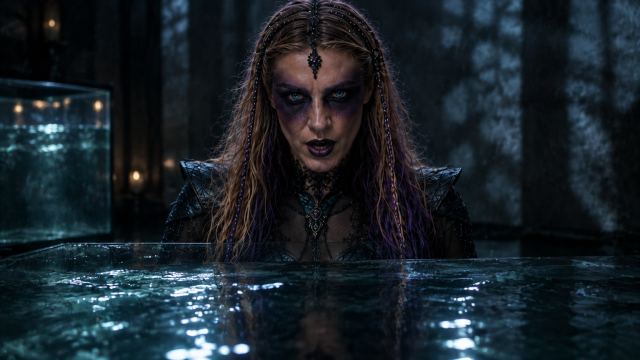
Visual Concept: "The Submerged Domain"Visual Style: Dark stormy ocean, deep violet moonlight, bioluminescent black water, and wet, metallic dark lace.Core Narrative: Mercy Lace starts trapped inside a shallow, artificial glass water tank built by a judgmental figure. As her power builds, she shatters the tank and unleashes a dark ocean that completely submerges the artificial environment.Scene Sequence BriefIntro (Spoken/Quiet Vocals):Setting: A stark, dark room featuring a shallow glass water tank.Visual Action: Mercy stands knee-deep in the tank, lit by a single overhead spotlight. On the opening line "You shook my hand...", a shadowy suited figure reaches over the edge of the glass to shake her hand, treating her like a captive exhibit. Verses & Pre-Choruses (Growls & Clean Vocals):Setting: High-contrast close-ups and dynamic camera movements inside the tank. Visual Action: Aggressive direct-to-camera lip-sync with purple-tinted, dark gothic makeup matching the cover art. Strobe lights flash on heavy bass impacts while the glass around her begins to crack under the sonic pressure. Choruses (Soaring Lead & Shrieking Ad-libs):Setting: Transition to an open, stormy ocean at midnight. Visual Action: Wide cinematic shots of Mercy standing waist-deep in dark, crashing ocean waves beneath a full purple moon. Giant tidal waves rise behind her, pulsing with energy on the high shrieking vocal moments. Instrumental Passages & Riffs:Setting: Rocky, wet coastal shoreline during a night storm. Visual Action: INSTRUMENTAL LOCK. Mercy walks along the rocky shore as her hair and wet lace dress blow wildly in the coastal wind. Her mouth remains strictly closed as she maintains a cold, dominant stare into the camera lens. Bridge & Escalation:Setting: Return to the artificial glass tank.Visual Action: Mercy slams her hands against the glass walls. The glass completely shatters in slow motion, unleashing a flood of black ocean water that washes away the room and the shadowy onlooker. Final Chorus & Outro:Setting: The fully flooded, endless ocean under the purple moon. Visual Action: Mercy performs in the center of a swirling water vortex. On the final whispered outro, the camera rapidly pulls back into a wide silhouette shot as she sinks calmly into the dark water, disappearing into the deep
 Video
Video
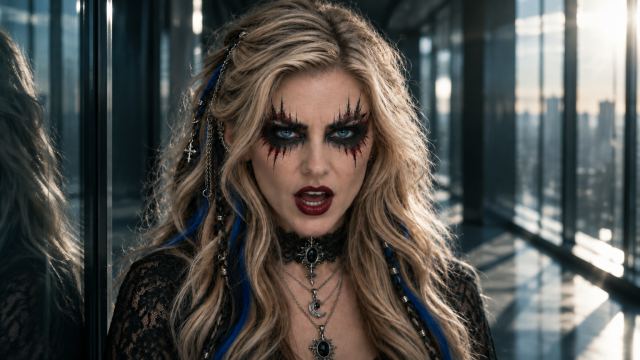
Visual Concept: Modern Domestic Isolation to LiberationSetting: High-end, minimalist residence (cold glass, stone, sharp shadows) representing psychological control and emotional deceit. Core Scene SequenceIntro: High-contrast close-up on Mercy in a dimly lit room. On the opening spoken lines, a blinding flash of light reveals a motionless shadow figure standing behind her. Verses: Mercy walks through a floor-to-ceiling glass hallway. The shadow figure tracks her in the glass reflections, but disappears when the camera moves to real space. Pre-Choruses: Intense direct-to-camera lip-sync. High-end home decor (glass vases, framed art) visibly cracks and shatters from the sonic weight of her vocals. Choruses: Dynamic wide shots in the main living space. Bright electric-blue and white lighting pulses through the room, physically pushing the shadow figure back toward the glass walls.Instrumental Passages: INSTRUMENTAL LOCK. Mercy stands motionless as her platinum hair moves in an indoor wind draft. Her mouth remains completely closed as she stares down the camera lens. Breakdown & Outro: On the heavy spoken impacts, the shadow figure disintegrates into ash. The surrounding glass walls shatter outward, opening the space to the night sky. Mercy delivers the final spoken line direct-to-camera with a confident smirk before a smash-cut to black. AI Generation RulesLip-Sync Protocol: Active vocal sync during sung/spoken lyrics; mouth strictly closed during instrumental sections. Continuity: Retain Mercy Lace's primary identity, wardrobe, and single-shot continuous camera motion with no on-screen text or UI elements
 Video
Video
Create a bright, triumphant female-fronted industrial gothic-metal video about rejecting yesterday and tomorrow and celebrating the present. Use the uploaded Mercy Fornan images as the only character references. Preserve her exact face, athletic body, platinum-blonde hair and piercing blue eyes. Use luminous white, electric blue, hot pink and silver environments with energetic stage lighting, open skies and a feeling of freedom. Mercy is confident, playful and alive—not sad or depressed. Show symbolic glimpses of the past fading behind her and the uncertain future losing its power while she claims the present. Use strong direct-to-camera performance during vocals with accurate lip synchronization. During instrumental passages, keep her mouth completely closed and use only confident body movement, hair movement, walking and expressive poses. No extra singers, random characters, dark funeral imagery or unrelated AI scenes
 Video
Video
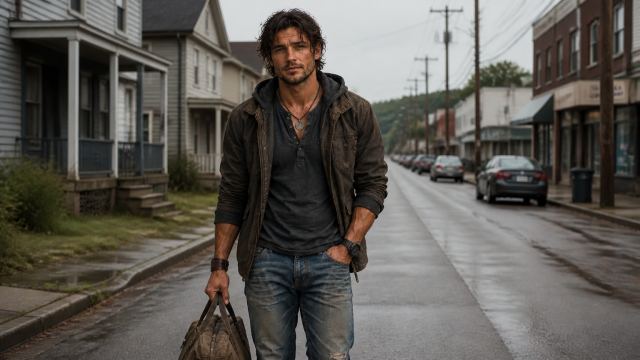
Follow Mason Vale, a grounded working-class man, through an ordinary life that quietly becomes a mountain climb. Show exhausting work, bills, late-night effort, setbacks, family responsibility, small victories, rebuilding, and continuing when nobody is watching. Keep Mason the exact same man throughout. Early scenes feel cool, overcast, worn, and heavy, with subtle upward movement through stairs, hills, ramps, roads, and daily life. He keeps looking toward a distant mountain, believing he still has far to go. Do not reveal too early how high he has already climbed. As the song grows, gradually brighten the weather and warm the world. At “Turn around / Look beneath you / Look at where you are,” reveal Mason already high above the clouds with his journey below him. The distant mountain is the NEXT mountain. End warm, expansive, grateful, and triumphant, not wealthy or flashy. He pauses to appreciate the view before stepping forward. Make the final reveal feel huge, emotional, and earned.
 Video
Video
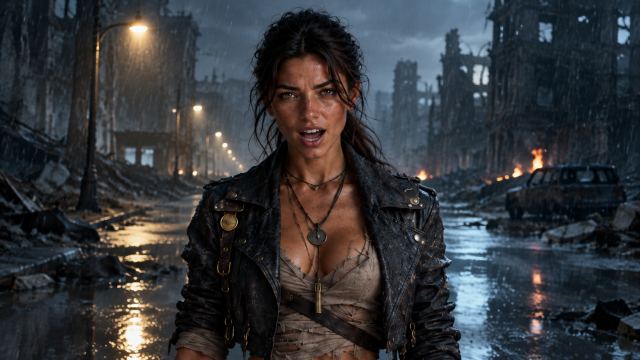
Alive in the Aftershock follows Lumière through a ruined city at night after an unseen disaster. Use @ref1 as Lumière in every scene: same face, body, hairstyle, outfit, and identity throughout. She begins exhausted, dirty, and already wearing battered survivor clothing, but with NO glowing gold transformation and no major fresh wounds. A battered black muscle car is her recurring vehicle and should remain visually consistent whenever it appears. The video should feel cinematic, grounded, dark, and physical. Early scenes use cold blue-gray night tones, rain, smoke, wet pavement, flickering streetlights, broken glass, empty roads, tunnels, damaged buildings, and distant debris. Each heavy bass hit or musical drop should feel like an invisible aftershock moving through the world: lights flicker, dust lifts, windows tremble or burst, signs shake, debris moves, and cracks spread through pavement and walls. Lumière’s damage must PROGRESS through the song. Begin with exhaustion, grime, and minor scrapes. As the song intensifies, add small cuts, bruises, scraped hands, torn fabric, and dust. Later, tiny molten-gold fissures begin inside damaged areas, first subtly on a hand or forearm, then gradually spread across her hands, arms, collarbone, neck, and finally a small amount onto her face. The gold represents pain and damage transforming into strength. It must increase gradually and must not appear fully developed in the opening scenes. Use the black muscle car and forward movement to connect the story. Show Lumière driving through ruined streets, stopping or stepping out during major chorus moments, moving through unstable roads, tunnels, and blocked paths, and continuing forward despite each aftershock. Avoid random wardrobe changes, fantasy armor, unrelated characters, magical creatures, or locations that break the ruined-city story. As the song builds, shift the palette slowly from cold blue-gray and black toward amber and molten gold. The middle should feel dangerous, unstable, and claustrophobic. The final section should become wider, brighter, and more powerful without becoming clean or cheerful. By the ending, dawn breaks through the storm. Golden fractures glow across Lumière’s accumulated damage and begin appearing in parts of the cracked environment. The destruction is not erased; it is transformed. End with Lumière alive and moving toward sunrise, still battle-worn but stronger, while the damaged world carries subtle gold through its fractures
 Video
Video
PRIMARY CHARACTER LOCK: pilot flying a paper plane big enough to sit in through a ca is the protagonist/singer identity in every scene image and every scene video. Preserve this exact identity and wardrobe/material cues: Character name: pilot flying a paper plane big enough to sit in through a ca. Sky Navigator is a young adventurer with short brown hair and a bright smile, wearing a vintage pilot jacket and classic aviator goggles. Their playful and adventurous spirit shines through as they navigate a whimsical, mosaic-filled world. This character embodies a sense of wonder and exploration, perfectly suited for a surreal, storybook setting. If story text says generic words like "young woman", "young man", "person", "protagonist", "performer", or describes a conflicting outfit, reinterpret that as pilot flying a paper plane big enough to sit in through a ca. Do not invent a different human, age, face, hairstyle, dress, hat, or wardrobe. Only add temporary scene-appropriate props/accessories that do not hide or replace the reference identity. Story-Locked MV rules: each scene is one complete full-frame GPT Image 2 keyframe. The lyric/story beat controls the visible character action; the downloaded location photo controls the scene plate; the selected character image controls identity only
 Video
Video
One woman, two sides of the same person. At home she is colorful, warm, artistic, expressive, safe and fully herself. Outside, the exact same woman wears dark elegant symbolic armor to protect herself, hide parts of who she is and gain approval. Same face, hair, age and identity always. Never show two women. Use mirrors, doorways, reflections and cracks of color. End with armor off at home. Again.
Example characters and storyboard frames
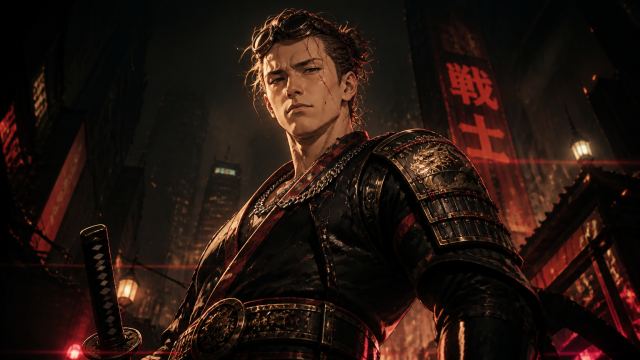
Theme characters from the AIMusicVideo.com gallery.
Frame
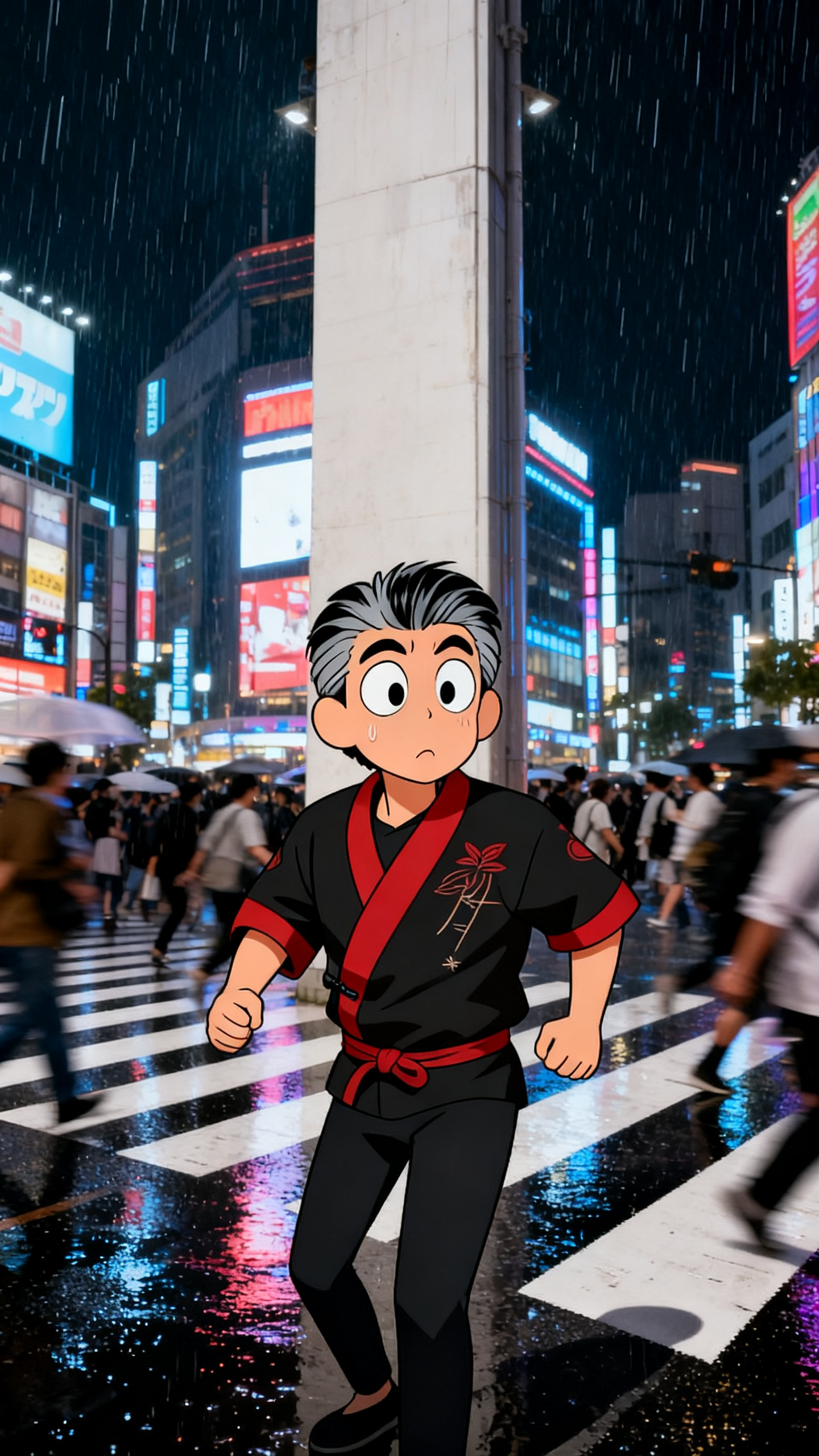
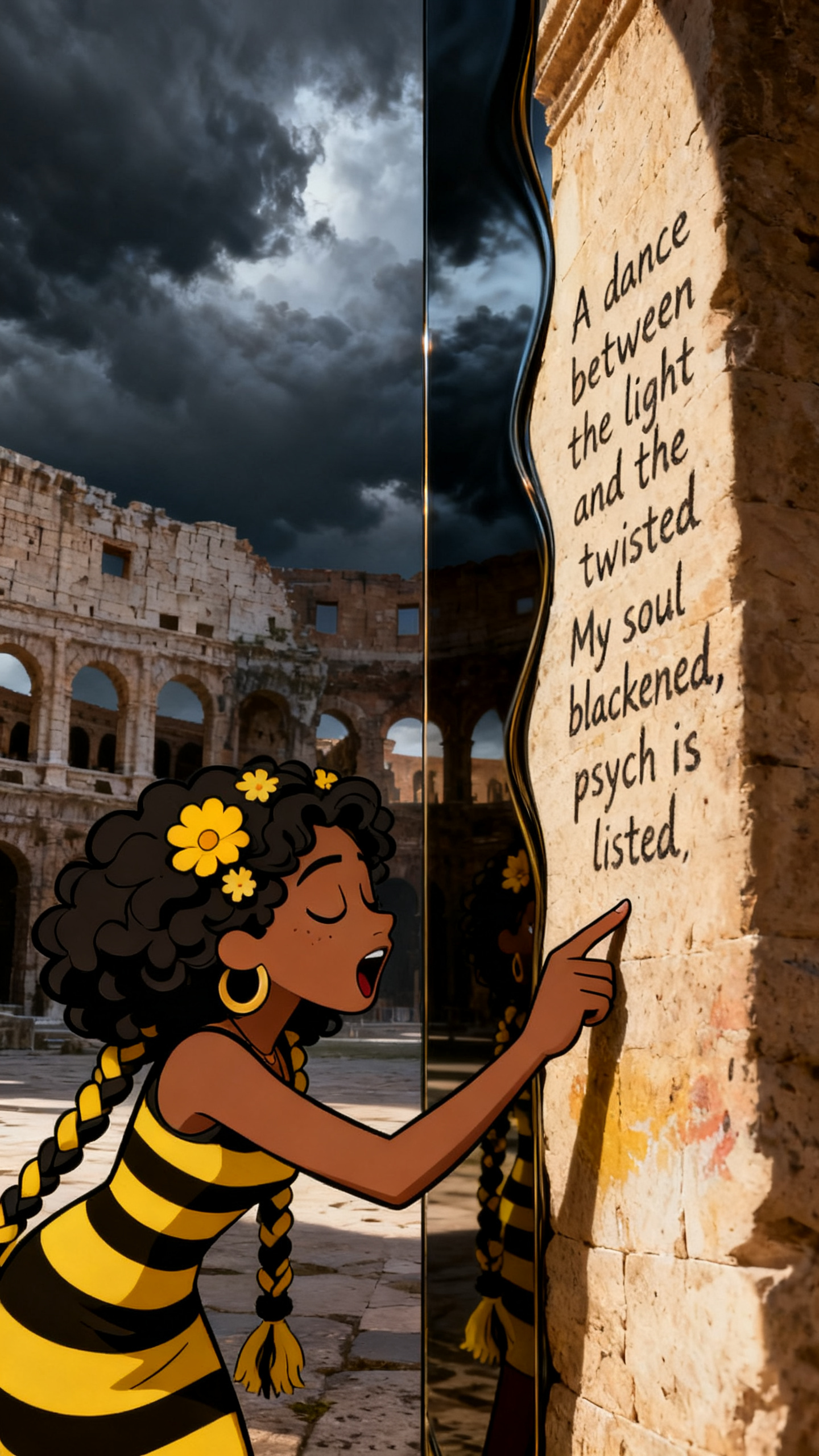
A specific recurring character can remain the subject while the real-world destination changes the shot.
 Frame
Frame
Wardrobe, silhouette, facial anchors, and rendering style matter when weather and lighting change.
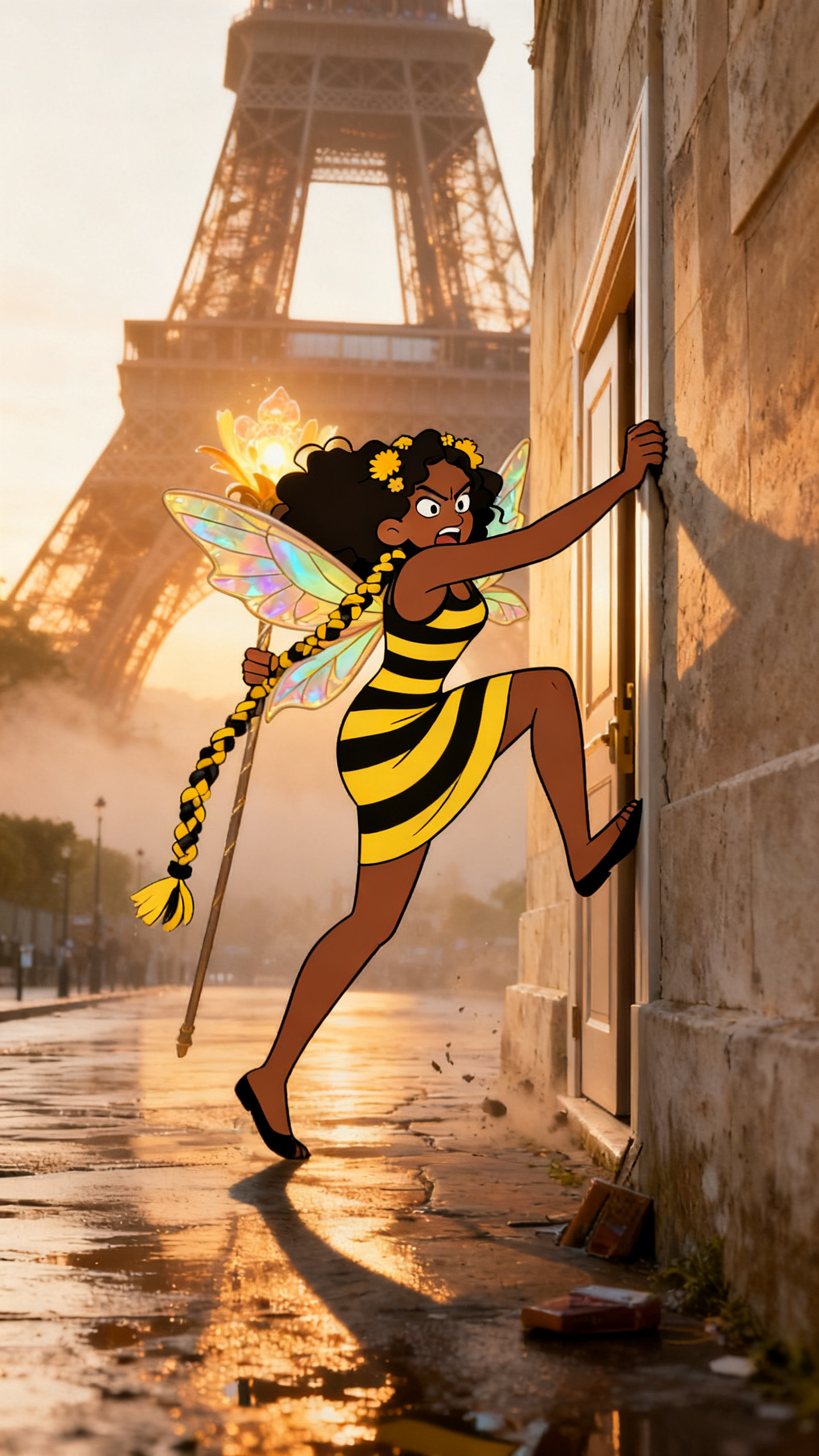 Frame
Frame
Wide shots still need recognizable color, clothing, proportions, and character placement.
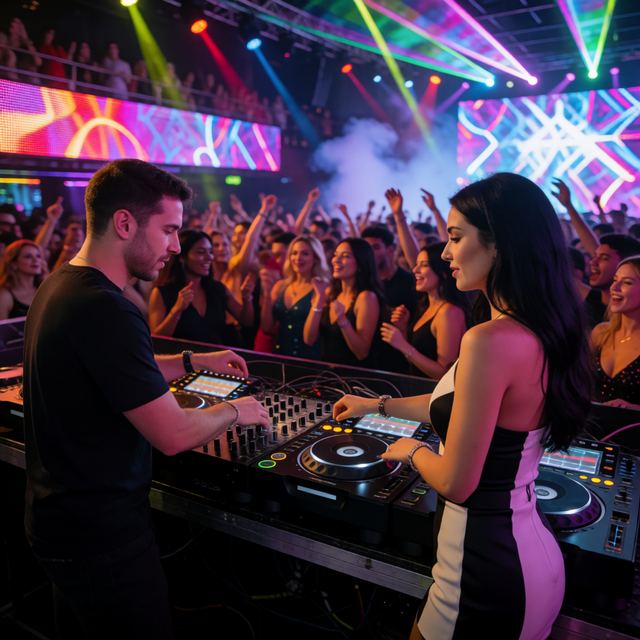 Character
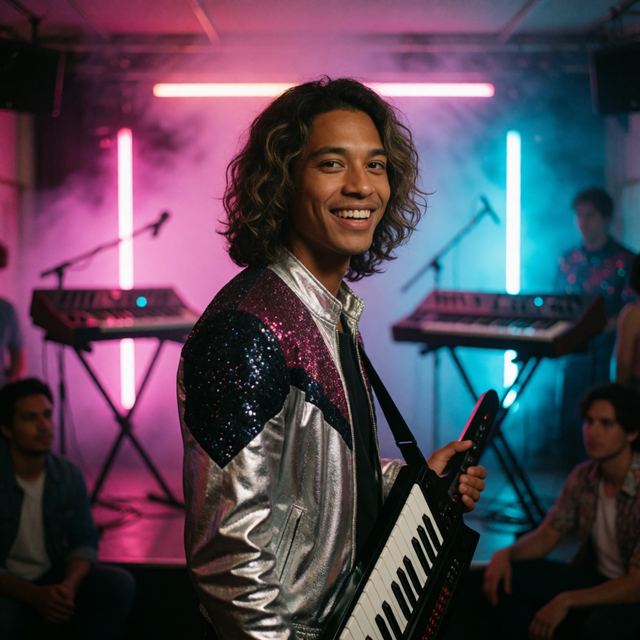 Character
Synth 80s stage
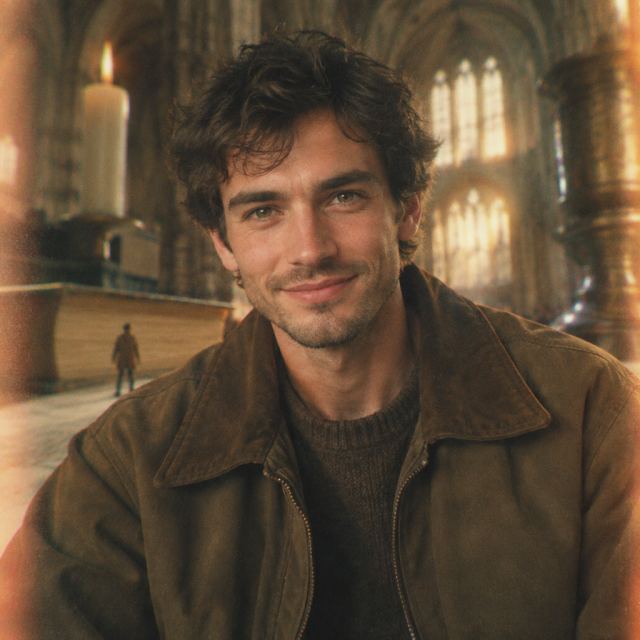 Character
Vintage 16mm
 Character
Minimalist
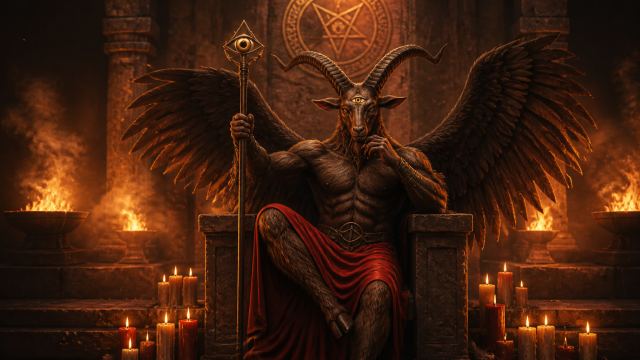 Character
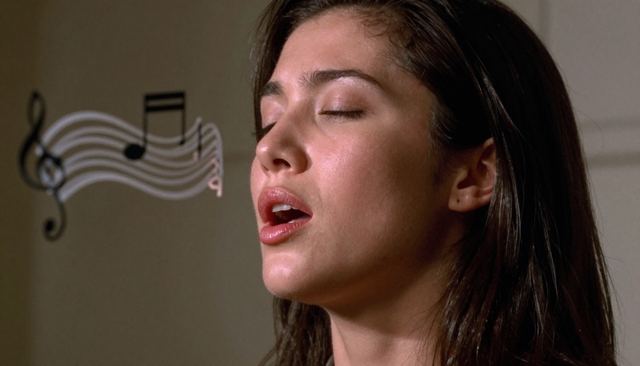 Character
Vocal Light Sculpture
 Character
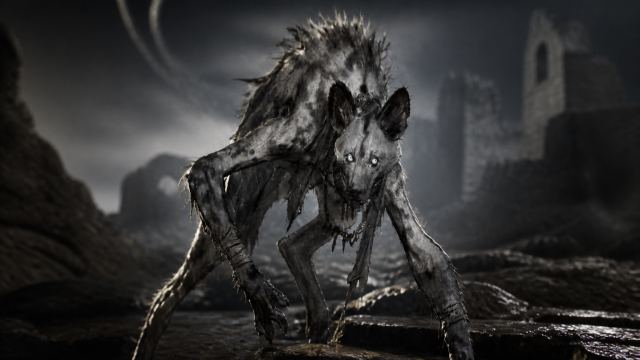 Character
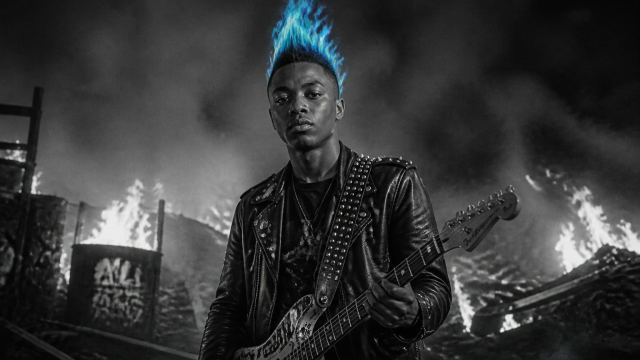 Character
 Character
 Character
 Character
Create or select a performer, attach the reference to the storyboard, and test the hardest scenes first.
Create a character